Desktop banner Mobile banner

Adapting Optical Validation Workflows to 1.6T AI Networks

As data centers scale up to 1.6T Ethernet fabric to support AI workloads, optical transceivers are becoming a critical bottleneck in network performance. At 224 Gb/s PAM4 per lane, PHY margins are razor-thin. Even minor signal degradations can cascade into link instability, network congestion, and reduced AI workload performance. At the same time, IEEE 802.3dj introduces significant updates to measurement definitions, challenging traditional validation approaches and interoperability workflows. Engineers developing next-generation optical interconnects must adapt to evolving standards requirements to ensure reliable AI network performance.

This webinar provides a technically grounded look at how 1.6T optical PHY testing is evolving, including new TDECQ and OMA definitions and the introduction of a new reference receiver. We’ll examine how these changes impact validation across different transceiver types, from traditional pluggables to LPO, CPO, and other architectures, and why current workflows may no longer accurately correlate or scale. You’ll also learn how automated, standards-aligned validation solutions can expose device limits earlier and help ensure reliable 1.6T optical performance for AI scale-out networks.

Presenters

  • Ben Miller
    Digital Product Marketing Manager, Keysight
    Ben Miller is the product marketing manager for Keysight digital test products, specializing in wireline and data center applications. He joined Keysight in 2022. He holds a bachelor’s degree in electrical engineering from the University of Texas at Austin.
  • Ahmad El-Chayeb
    Senior Strategic Product Planner
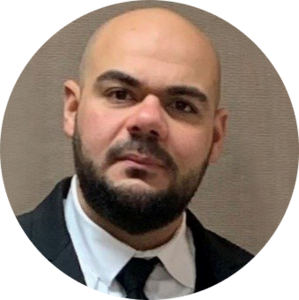
    Ahmad is an Application Engineer supporting high-speed digital instruments such as oscilloscopes, Digital Communication Analyzers (DCAs), BERTs, AWGs, and logic analyzers.

    Before joining Keysight, Ahmad worked at Synopsys on various DDR and HBM PHY products. Prior to that, he worked at Diablo Technologies, an Ottawa-based startup, on the development of innovative DDR products, including MCS (Memory Channel Storage) and Memory1, a flash memory subsystem.

    Ahmad holds a B.S. in Electrical Engineering from Concordia University in Montreal. He is based in Ottawa and supports customers across Eastern Canada.

Reserve Your Spot

Error: Please enter your first name.
Error: Please enter your last name.
This field is required.
Webinar: Adapting Optical Validation Workflows to 1.6T AI Networks by Keysight
